THE ROUNDUP
Cash Is King. But Is It Costing You a Fortune?
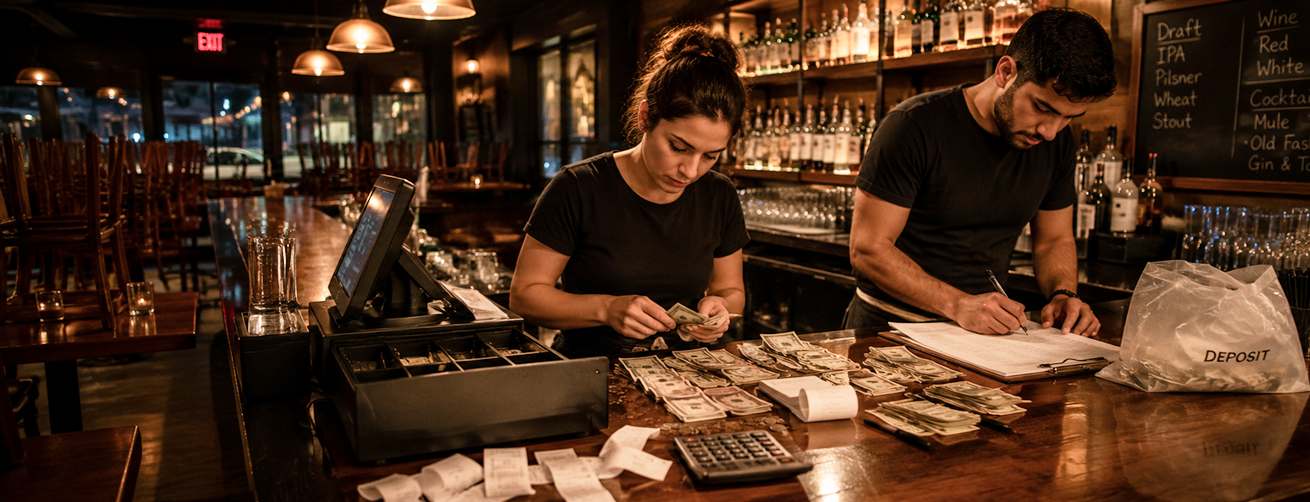
Cash feels safe. It's the thing that's always worked, the option with no monthly statement and no processor taking a cut. For a long time that was the whole pitch. But the longer you actually watch where your time and money go in a shift, the more you notice that cash has its own bill, and nobody mails it to you. It just shows up in slower lines, longer closeouts, and the occasional drawer that doesn't add up.
More bars and restaurants are noticing, and a growing number are going cashless or close to it. Some love it. A few have quietly walked it back. The point of this post isn't to talk you into either one. It's to lay out what you're actually trading, so you can decide whether the switch fits your room.
The Hidden Tab on Handling Cash
Cash looks free because the cost is spread out in small ways that never land on one line. Add them up and it starts to look like a payroll item you forgot you were carrying.
- Slower service. Counting change at the register adds seconds to every transaction, and seconds pile up on a Friday night. A tap takes a fraction of the time, which means a shorter line and a bartender who's pouring instead of fishing for quarters.
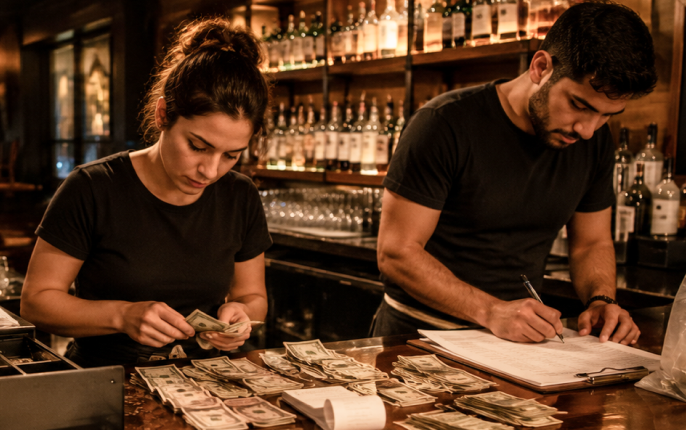
- Reconciliation headaches. Counting the drawer, chasing a shortage, prepping the deposit. That's time at the end of a shift when nobody has any left, and it's usually the owner or a trusted manager doing it instead of going home. Counting twenties at midnight is nobody’s idea of a nightcap.
- Theft and shrinkage. Cash is the easiest thing in the building to make disappear, whether it's a skimmed drawer or a register that mysteriously runs short on the same nights.1 Nobody has ever walked out the back door with a card reader stuffed in their sock.
- The cost of moving it around. Bank runs, change orders, a safe, maybe an armored pickup if you're big enough. None of it is huge on its own, but it's all overhead you stop paying the day the cash stops piling up.
Cash looks free because the cost is spread out in small ways that never land on one line. What Operators Are Gaining
The owners who like going cashless tend to talk less about the money saved and more about how the shift feels. Things move quicker and the back end gets quieter.
- Faster lines. Card and mobile payments clear in a beat or two, so the bar moves and you can serve more people in the same crunch.
- Cleaner books. When every sale runs through the system, your numbers reconcile themselves. The end-of-night count gets short, and your sales data lines up with what actually came in.
- Less risk on the floor. No drawer full of cash means less to steal and one less thing to worry about at close.
- Less time on busywork. The hour that used to go to counting and deposits goes back to the business, or to your own evening for once. Your safe was never much of a conversationalist anyway.
What You Give Up
This is the part the cheerleaders skip, and it's the part that decides it for a lot of rooms. Going cashless isn't free either, it just moves the cost somewhere else.
- Processing fees on everything. When every sale is a card sale, you pay a cut on every sale.2 For a high-volume, low-ticket spot, that adds up, and it's worth running your own numbers before you assume the trade is a wash.
- Customers you might turn away. Some of your regulars still pay cash, whether by habit or because that's what they've got. A strict no-cash policy can quietly cost you the ones who don't want to be told how to pay.
- A legal question worth checking. A number of cities and states have passed rules requiring businesses to accept cash, and more keep coming up.3 Before you go fully cashless, it's worth confirming what's allowed where you operate.
- Tips and your tipped staff. Cashless changes how tips flow, from how they're pooled to when your team actually sees the money. Worth a real conversation with your staff before you flip the switch, not after.
So How Do You Decide?
There's no universal answer here, which is exactly why it's worth thinking through instead of copying the bar down the street. A few questions sort most of it out.
- What's your average ticket? Higher tickets absorb processing fees more comfortably than a room full of two-dollar sales.
- Who's actually paying cash? Pull your own numbers. If cash is already a sliver of your sales, the switch is easy. If it's a third of them, slow down.
- What does the law say where you are? Check the local rules before you commit to anything, not after a customer points them out. Finding out you broke the law from the guy who couldn’t buy a beer is a rough way to learn it.
- Does halfway work better? Plenty of places land in the middle. Push cards and mobile, keep a small cash option, and skip a fight you don't need to have.
The Honest Bottom Line
Cash isn't the safe default it used to be, but cashless isn't a magic upgrade either. Both come with a tab. The smart move is to actually look at yours, your ticket size, your cash mix, your local rules, and your staff, and decide from there. For a lot of operators the answer ends up being somewhere in the middle, and that's a perfectly good place to be. The worst version is the one where you never ran the numbers at all.
Sources